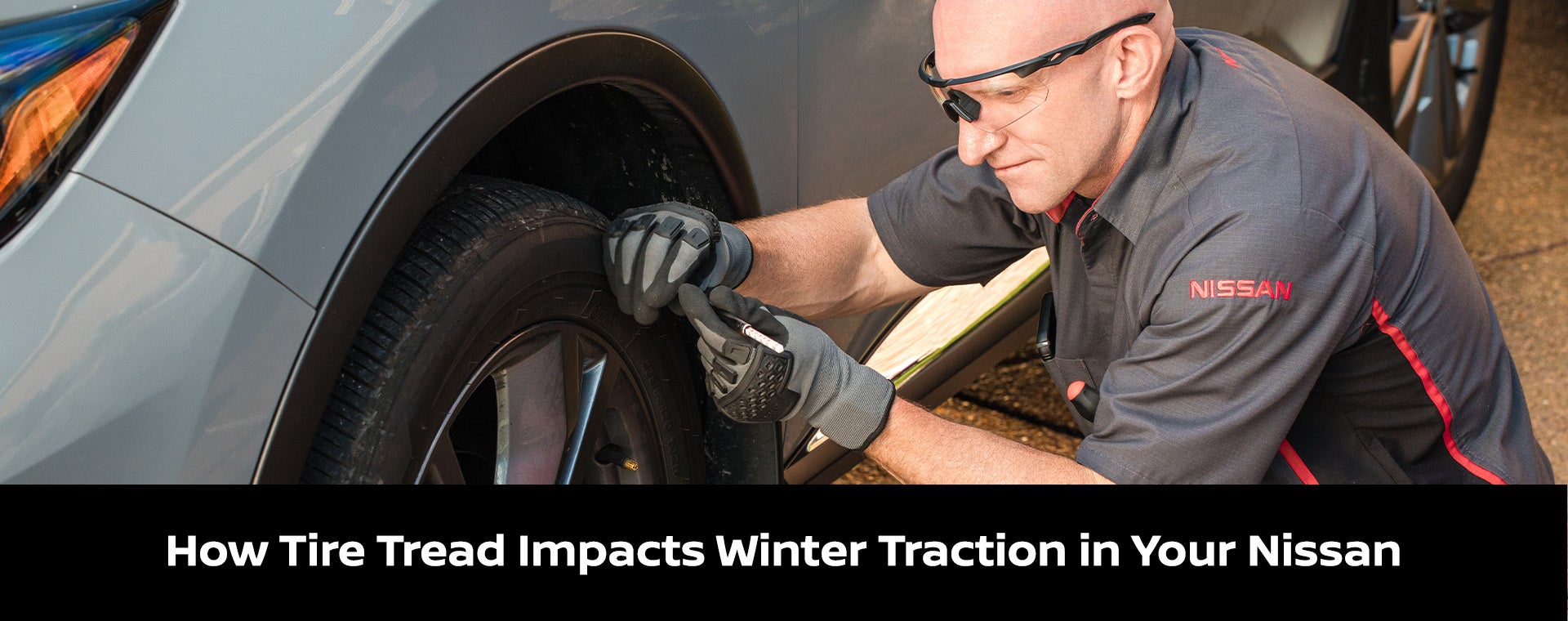
A winter morning around Swarthmore doesn’t always begin with a blanket of snow. Sometimes it’s just cold rain, slush collecting near the curb, or a thin layer of ice on a bridge that looked perfectly ordinary a few minutes earlier. Those conditions can be especially tricky when your Nissan’s tires have lost some of their tread. You might not notice much difference during a dry afternoon drive, but worn tires have a harder time maintaining traction when water, snow or slush gets between the rubber and the pavement. For Nissan drivers traveling along Route 320, I-476 or the roads around Philadelphia and Delaware County, knowing how much tire tread you have left is an important part of winter preparation. What Does Tire Tread Actually Do on Wet and Snowy Roads? Tire tread has a more important job than giving your tires their familiar patterned appearance. The grooves help channel water and slush away from the tire’s contact patch, allowing the rubber to maintain contact with the pavement. Smaller cuts in the tread, called sipes, provide additional gripping edges that can help in snow and slippery conditions. As tread wears down, the grooves become shallower and less effective at moving water away. That increases the risk of hydroplaning, particularly when driving through standing water at higher speeds. Snow creates another challenge. Tires need sufficient tread depth and an appropriate tread pattern to generate traction, especially when accelerating or braking. This is why a set of tires that feels perfectly acceptable on dry pavement can behave very differently during a Pennsylvania winter storm. Why Worn Tires Make Slushy Roads More Difficult Slush can be surprisingly difficult to drive through because it combines water and snow into a heavy, slippery mixture. When your tires have adequate tread, their grooves help move some of that material away from the contact area. As those grooves wear down, the tire has less capacity to clear slush, which can reduce steering response and braking traction. Imagine driving your Nissan Altima along a wet stretch of Baltimore Pike after an overnight snowfall. The main lanes may be clear, but slush can accumulate near intersections, turn lanes and the edges of the roadway. A tire with worn tread may struggle more in those transitions than one with deeper, well-maintained tread. The important takeaway is that tire condition matters even after the snowplows have passed. Wet pavement and leftover slush can still create difficult driving conditions. How Much Tire Tread Should Your Nissan Have Before Winter? A tire tread-depth gauge is one of the easiest ways to check how much usable tread remains. Tread depth is measured in thirty-seconds of an inch. Although 2/32 inch is a common legal minimum for passenger tires, that’s not a recommended target for winter driving. Here’s a practical guide: Tread Depth What It Means for Winter Driving 6/32 inch or deeper More remaining tread to help manage wet and snowy conditions, depending on tire type 4/32 inch Time to evaluate replacement, particularly before regular snow or heavy rain 2/32 inch Very limited remaining tread; replacement is necessary Tire type, age and condition also affect traction, so tread depth shouldn’t be the only factor in your decision. If you’re unsure where your tires stand, a professional inspection can help identify uneven wear, damage or areas where tread depth is lower than it appears at first glance. Can Your Nissan’s AWD System Compensate for Low Tire Tread? Available all-wheel drive can be useful when winter weather arrives, especially on Nissan SUVs like the Rogue and Pathfinder. AWD systems help manage power delivery to the wheels, improving the vehicle’s ability to accelerate on slippery surfaces. But AWD can’t replace the traction provided by healthy tires. When you press the brake pedal or turn the steering wheel, your Nissan still depends on the grip available between its tires and the road. That applies whether you’re driving an AWD Nissan Rogue, a front-wheel-drive Sentra or Kicks, or a pre-owned Nissan Rogue. A vehicle with AWD and worn tires can still experience reduced braking and cornering traction. That’s why checking tire condition is important even if your Nissan has features designed for changing road conditions. Three Tire Checks Worth Making Before Pennsylvania’s First Freeze You don’t need a major snowstorm in the forecast to give your tires some attention. First, measure your tread depth. Check multiple locations across each tire, since uneven wear can leave some sections with significantly less tread than others. Second, check tire pressure. Air pressure generally decreases by approximately one PSI for every 10°F drop in temperature. Use the recommended cold tire pressure on your Nissan’s door-jamb label rather than the maximum pressure printed on the tire itself. Third, look for uneven wear or damage. Cracks, bulges, unusual wear patterns and persistent pressure loss are all reasons to have your tires inspected. Regular tire rotations can help promote more even wear, but they can’t restore tread that’s already gone. If your tires are approaching the end of their usable life, replacing them before winter weather arrives is the safer approach. Schedule a Winter Tire Inspection at Loughead Nissan in Swarthmore, PA A little preparation can make a big difference when Pennsylvania weather turns unpredictable. Knowing your Nissan’s tread depth, tire pressure and overall tire condition gives you a better understanding of how ready your vehicle is for winter driving. At Loughead Nissan, our Nissan-trained technicians can help evaluate tire wear, check tire condition and recommend appropriate maintenance or replacement options. Our Nissan Express Service offerings include tire rotation and balancing, new tires and multi-point inspections that measure tire tread depth. Explore our Service & Parts Department, review available service specials, or Schedule a Service Appointment before the next stretch of cold weather. Visit us at 755 S. Chester Road (Route 320) in Swarthmore, PA, serving Nissan drivers from Swarthmore, Philadelphia, Drexel Hill, Concordville and nearby communities. Whether you’re driving a new Nissan Rogue or keeping a longtime Altima on the road, we’ll help you make sure your tires are ready for the season ahead.