


When people shop for a car, they tend to focus on the obvious things first. Horsepower, fuel economy, screens, styling. Those are the features that stand out during a test drive and show up in comparisons. What tends to matter more over time, though, is something quieter. It’s the material you sit on every day, the surface your hand rests on at a red light, and the way the interior holds up after years of regular use.
Interior materials are not always the headline feature, but they shape the long-term experience of owning a vehicle. You notice when a seat starts to crease too early, when it feels overly hot in the summer, or when it simply doesn’t feel as comfortable as it did when the car was new. That is exactly where Nissan has started to shift its attention, and it is the reason materials like TailorFit® are becoming more common across the lineup.
What is Nissan TailorFit® and how is it different from typical leatherette?
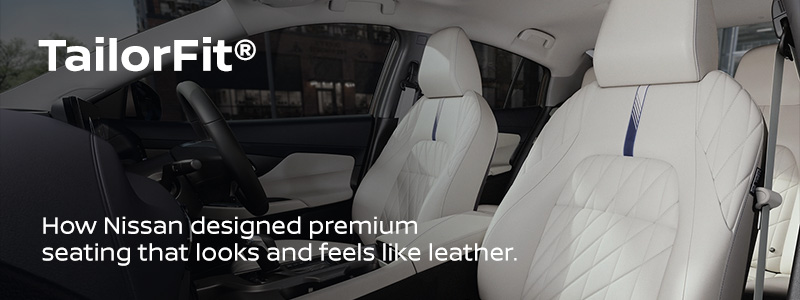
TailorFit® is Nissan’s proprietary synthetic seating material, developed to offer the look and feel of leather without some of the trade-offs that come with it. Unlike older leatherette materials that could feel stiff or overly smooth, TailorFit® is engineered with a more natural texture. The grain pattern is designed to mimic the spacing of human fingerprints, which creates a softer, more tactile surface when you interact with it.
The goal is not to imitate leather at a glance, but to replicate how it feels in daily use. When you sit down, shift your position, or rest your arm against the seat, the material is meant to feel broken-in rather than artificial. That difference becomes more noticeable over time, especially compared to older synthetic materials that never quite lost that rigid feel.
Why Nissan is rethinking leather instead of replacing it entirely
Leather still carries a certain expectation of quality, and for many drivers, it remains the preferred option. At the same time, it comes with characteristics that are not always ideal in everyday driving. It can wrinkle with repeated use, fade with prolonged sun exposure, and add additional weight to the vehicle. It is also more complex and resource-intensive to produce.
Nissan’s approach with TailorFit® is not about eliminating leather, but about offering an alternative that solves some of those challenges. By using a polyurethane-based material, Nissan is able to create a more consistent surface that resists creasing and maintains its appearance over time. It also allows for more efficient production, which helps bring a more premium-feeling interior into vehicles that are still positioned at an accessible price point. This approach reflects a broader shift in how automakers think about interior quality. Instead of relying on traditional materials by default, there is more focus on how those materials perform over years of ownership.
Does TailorFit® actually hold up better over time?
Durability is one of the key reasons this material exists in the first place. Seats go through constant use, and over the life of a vehicle, that means thousands of entries, exits, and adjustments. Traditional leather can develop visible creases in high-contact areas, particularly on the driver’s seat, which gradually changes the look of the interior.
TailorFit® is designed to better resist that kind of wear. The material maintains a smoother appearance after repeated use, which helps the interior look newer for longer. For drivers who plan to keep their vehicle for several years, that consistency can make a noticeable difference in how the cabin ages. It is not about making the interior look perfect forever. It is about slowing down the kind of visible wear that people tend to notice first.
Which Nissan models offer TailorFit® seating today?
TailorFit® is already available across several models that people shop every day, rather than being limited to a single premium trim. You can find it in vehicles like the 2026 Nissan Sentra SL, as well as models such as the Pathfinder, Armada, and LEAF in select trims.
That accessibility is part of what makes it relevant. It brings a more refined interior experience into vehicles that are designed for daily driving, commuting, and long-term ownership. It is not positioned as an upgrade you have to stretch for, but rather as a standard of comfort that is becoming more common across the lineup. Drivers visiting Loughead Nissan will likely notice it in models like the Sentra and Pathfinder, where the difference is easiest to appreciate in person.
How TailorFit® fits into a broader shift in interior design
Nissan is not alone in rethinking what premium materials should look and feel like. Across the industry, manufacturers are exploring alternatives that offer durability, consistency, and comfort without relying solely on traditional leather. Some brands are experimenting with recycled textiles, others with new synthetic blends, and many are focusing on materials that better align with how people actually use their vehicles.
What connects these approaches is a shift away from status-based materials and toward experience-based ones. The emphasis is less on what a material is called and more on how it performs over time. Drivers are paying closer attention to comfort, longevity, and how an interior feels after months or years of ownership, not just during the first impression. TailorFit® fits directly into that movement by offering a material that prioritizes everyday usability without losing the sense of refinement people expect.
See how it feels in person at Loughead Nissan in Swarthmore, PA
Interior materials are difficult to evaluate through photos or descriptions because the difference is something you feel more than you see. Sitting in the seat, running your hand across the surface, and spending a few minutes in the cabin provides a much clearer sense of what sets one material apart from another.
At Loughead Nissan, you can explore models equipped with TailorFit® seating and experience how it compares to both traditional leather and older synthetic materials. That side-by-side perspective tends to answer the question quickly. Over time, features like horsepower and technology fade into the background of daily driving, but the way your seat feels does not. Choosing a material that holds up and remains comfortable is one of the decisions that continues to matter long after the purchase is complete.
Connect with us


Recent Blog Entries
- TailorFit®: The Part of Your Car You Notice Three Years Later (And Why Nissan Is Fixing It)
- Loughead Nissan Monthly Offers: Big Savings Across the 2026 Lineup
- Why Is the 2026 Nissan LEAF Winning Major EV Awards in 2026?
- Explore Loughead Nissan’s Monthly Offers on Popular 2026 Nissan Models
- The 2026 Nissan LEAF and Sentra Are Already Turning Heads, and They Haven’t Even Hit the Awards Stage Yet