



Can you guys believe that sooner than later the roads will be covered in snow and winter will be in full swing? This means if you haven’t started your fall service, right now is the perfect time to start! Where should you start with your fall service? Well, this week we are focusing on one very important fall service, and that is servicing your tires! As we all know, your tires are very important to your vehicle’s performance, especially during the winter months. If your tires are balding, have low PSI, or have any other damage, you could find yourself having issues down the road…literally. So what should you be looking for when inspecting your tires? Below you can find all the information you’ll need, and if you need any help choosing or replacing tires be sure to schedule a service appointment with us today!
Checking Your Tire Depth:
- Evaluate the tread depth of your tires to make sure you have enough traction to grip the road
- An easy way to check you tire depth is with the Penny Test
- Just place a penny upside down in your tread. If you can see the top of Lincoln’s head, it may be time for new tires.
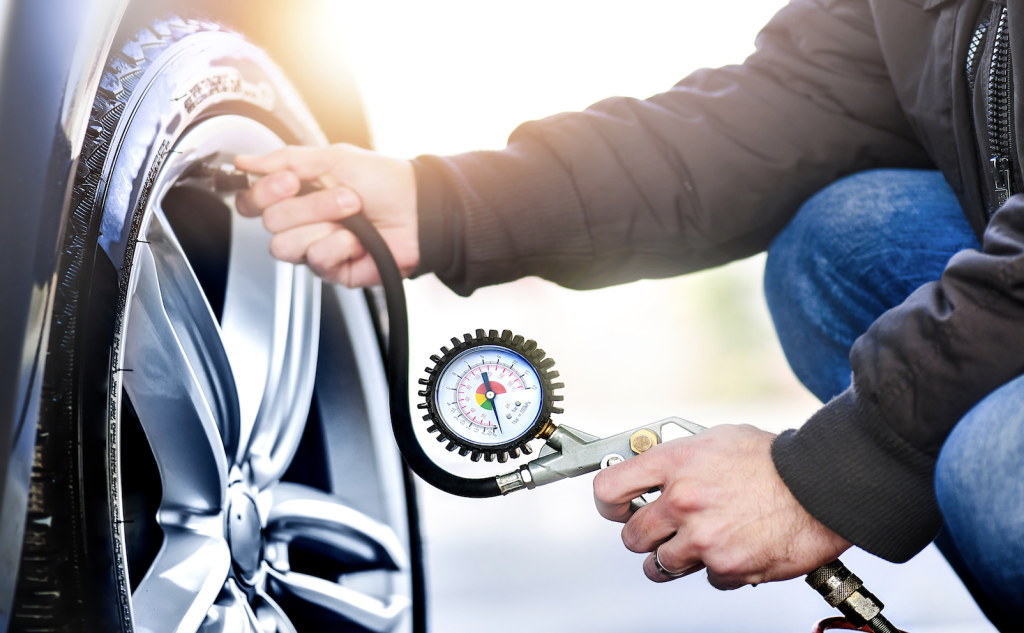
Checking Your Tire Pressure:
- Use a tire pressure gauge to make sure your tires are properly inflated and then fill your tires with air as needed
- Your owners manual will have the proper PSI for your tires
- To check your pressure, remove the valve stem cap, press the gauge head evenly onto the valve stem, use firm pressure so that the hissing sound stops
- Remove the gauge and read the pressure adjust as needed
Checking Your Tire’s Condition & Age:
- Look at the tread and sidewalls for any cuts, scrapes, punctures, bulges, bumps or cracks. If you see anything suspicious, have a tire service professional take a closer look.
- You also want to keep an eye on your tire’s age. Depending on how much you drive, your tire’s tread may last for years but just because the tread is not worn out does not mean that your tires don’t need to be replaced
- To determine your tire’s age just look at the DOT stamping on the sidewall
- At the end of the DOT stamp, there is a four-digit code that will tell you when the tire was manufactured.
Connect with us


Recent Blog Entries
- Explore Loughead Nissan’s Monthly Offers on Popular 2026 Nissan Models
- The 2026 Nissan LEAF and Sentra Are Already Turning Heads, and They Haven’t Even Hit the Awards Stage Yet
- Drive More for Less With Loughead Nissan’s Monthly Offers
- Not All Ears Hear the Same. Now Your Nissan Knows That.
- Loughead Nissan Monthly Offers: Exceptional Savings on New Nissan Models