Blog / How To

Check Your Tire’s PSI With This Guide From Loughead Nissan | Swarthmore, PA

BLOG_HEADER_4

Fall is on the horizon, and with the fluctuations in weather recently, your tire’s pressure could be a bit off. Did you know outside temperatures can cause tire pressure to vary by as much as 1 psi per 10 degrees? And if you choose to ignore your tire pressure you could run into some issues that can cause serious damage to your vehicle and put your safety in danger. So, to avoid any issues down the road, be sure to check out the information below or schedule a service appointment today at the Loughead Nissan Service Center!

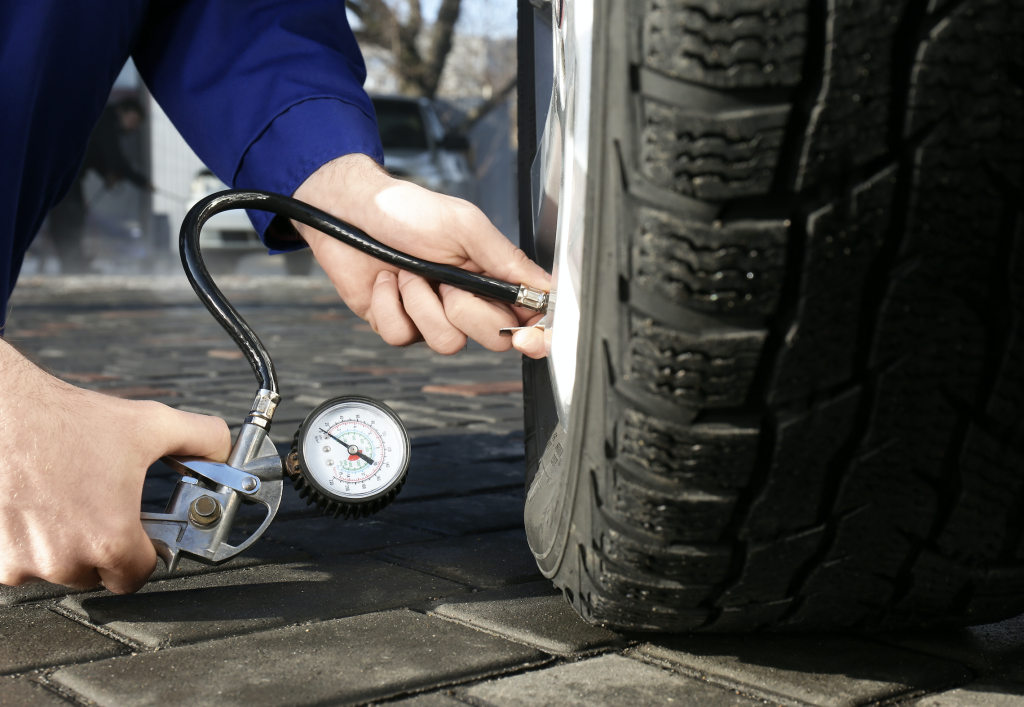
Loughead Nissan’s Guide To Checking Your Tire’s PSI:

  • If you do not have air at home, most gas stations have an air pump for you to use. 
  • Remove dust caps from the tires’ valve stems.
  • Insert your tire gauge into the tire valve and leave it in for a few seconds
  • When you remove it, the gauge will provide a PSI reading
  • If the tire gauge’s recorded reading is higher than the manufacturer-recommended rating, press the gauge tip on the valve stem until you hear air leak out. Check the tire pressure again.
  • If the reading is lower than recommended, you will need to fill the tire with air. 
  • When filling the tire, firmly press the air-hose into the valve, as you did with the tire gauge
  • When you think you’ve added or let out enough air, check the pressure a few times with the gauge.
  • Return the valve dust caps.
Posted in:

Related Posts

Vacation Checklist: We Got Your Back!

Going on a road trip this summer? Make sure you have everything you’ll need for the journey using a list! I am the worst when it comes to packing, I swear that I have everything I need and then I find myself running up and down the stairs at least ten more times before I actually leave the house! Don’t do that to yourself and use the reminder list below to save you the hassle and stress that comes with packing for vacation! In The Car Blankets and pillows Music Folding chairs Reading material Camera Cash for toll roads GPS Binoculars Wet wipes Puzzle books and quiet toys for kids Pen, pencil, notepad Tissues, paper towels, toilet paper Small bags for garbage Vehicle Emergency Kit Flashlight, roadside signal flares or reflective cones/warning signs First aid kit Booster cables, wrenches, screwdrivers (basic toolkit) A gallon jug of water Extra washer fluid, oil, transmission oil, brake fluid Rags, workshop towels, old blanket Gloves Spare belts (alternator, fan and air conditioner belts) Candle, warm clothes, a heavy blanket (for winter travel) Duct tape and WD40 And, there you have it! A complete list of everything to pack before you’re heading out the door on all your summer road trip adventures! Going On Vacation? Service With Us!

Care For Your Wipers Well

The windshield wipers that rest at the base of your windshield are one of the hidden heroes of your vehicle. Seriously, without them you wouldn’t be able to drive in the rain, get bug splatters off, clean dirt and dust and pollen off the glass, and you certainly wouldn’t be able to drive in winter. But how much do you actually think about your windshield wipers? I’m going to hazard a guess that it’s not a lot, unless something gets stuck in them or you run out of washer fluid. Well, I feel like it’s important to tell you about how to maintain your windshield wipers properly and how to tell when it’s time to replace them. Check it out! You should take a look at your wipers at least every time you get gas. When you’re inspecting your wiper blades, look for the following: Broken frame, which is detachment of frame arms at joints or connection points. Metal corrosion, especially at joints and claws. Visible cracks, tears, and missing pieces in the rubber squeegee’s edge. Flex the rubber squeegee back and forth to see if it is still flexible. Aged squeegees will have difficulty conforming to the shape of your windshield and create streaks. Check the squeegee wiping edge for rounded edges which can prevent the wiper blade from making strong contact with the windshield and reduces wipe quality. Tug to ensure that the wiper blade has been securely installed on the wiper arm. Check to make sure that the squeegee is secure in the wiper frame. As we (should) know, the materials that your windshield wipers are made of are not ones that will last until the end of time. There are a lot of ways that the world around you can degrade your wipers: Sun: Ultraviolet light and ozone deterioration Oil: Car waxes and exhaust hold rubber-deteriorating oil Airborne debris: Sand, mud, and dust carried in the wind Moisture: Acid rain and salt water (in moist air both near the shore and inland) Now to the signs that your wipers need a change. There are a few to look out for, and if you experience multiple items on this list at once then it’s definitely time to head over to the auto store to buy new wipers. Streaking: occurs when the rubber squeegee dries, hardens and cracks. It can also be caused by tree sap, road tar and other foreign substances collected on either the glass or the blade. Skipping: occurs when the blade develops a curvature from lack of use (e.g. left in the ‘parked position’ for an extended length of time). Wearing: occurs with extensive use and is when the rubber edges are rounded instead of squared. Splitting: caused when the sun’s ultraviolet rays penetrate the rubber squeegee, causing it to break down and separate from the frame. Bent refill vertebra and bent frames: cause inconsistent contact with the glass surface, creating streaking or skipping. If you’re wondering how to take care of your wipers throughout their life - i.e. before it’s time to replace them - here’s how you can do that! Clean your windshield every time you fill your gas tank. Gently wipe the rubber squeegee with a damp paper towel to remove any loose dirt or oil. Never use your windshield wipers to de-ice your windshield. Instead, either use an ice scraper or use your defroster to melt snow and ice. Pull your wiper blades away from the windshield during winter months to prevent ice build up on the rubber squeegee and to prevent them from sticking to the windshield. Need Service Elsewhere? Call Us!


Wash Your Car Better Than Ever!

Washing your car is one of the go-to activities for a warm, nice weather weekend. You can do it solo or with the whole family, and it’s a great way to care for your car and get outside at the same time! However, there are definitely some tips and tricks for making sure that you’re washing your car the way it deserves to be washed - preserving your paint job and guarding against future damage. There are some supplies that you’ll need for washing your car. These are: Automotive soap/shampoo Microfiber cloths (yes, multiple) Wash Mitt Wheel brush Buckets Water The first thing you should do is park your car in the shade and then give it a good rinse with a strong blast from the hose. If you have a pressure washer, you can also use it. Just make sure you’re standing a few feet away from your vehicle… but it’s a great way to literally blast off dirt, mud, grime, and other things that might stick to your paint. It’s important to get as much junk off your car before you start washing so that you don’t scratch the paint with anything that stuck to the surface of your vehicle. Next, start soaping up your vehicle. Use long straight strokes with the washing mitt or designated washing cloth and wash your vehicle panel by panel. Let the soap hang out for a minute and tackle the wheels with the wheel brush and another cloth. After you’ve soaped the whole thing up, give your vehicle a final rinse. Do not let it air dry! After you’ve rinsed off all of the soap, dry your vehicle panel by panel with a clean, dry microfiber cloth. The last step, if you want to, is to apply a protectant spray or wax to your vehicle to maintain the good work you’ve just done and to prevent future damage between this wash and the next. You’re done! Check out your great work and let your car be the envy of everyone on your street. You earned a little praise, don’t you think? New Cars Start Off Clean